Cart (0)
Your cart is empty


Your cart is empty
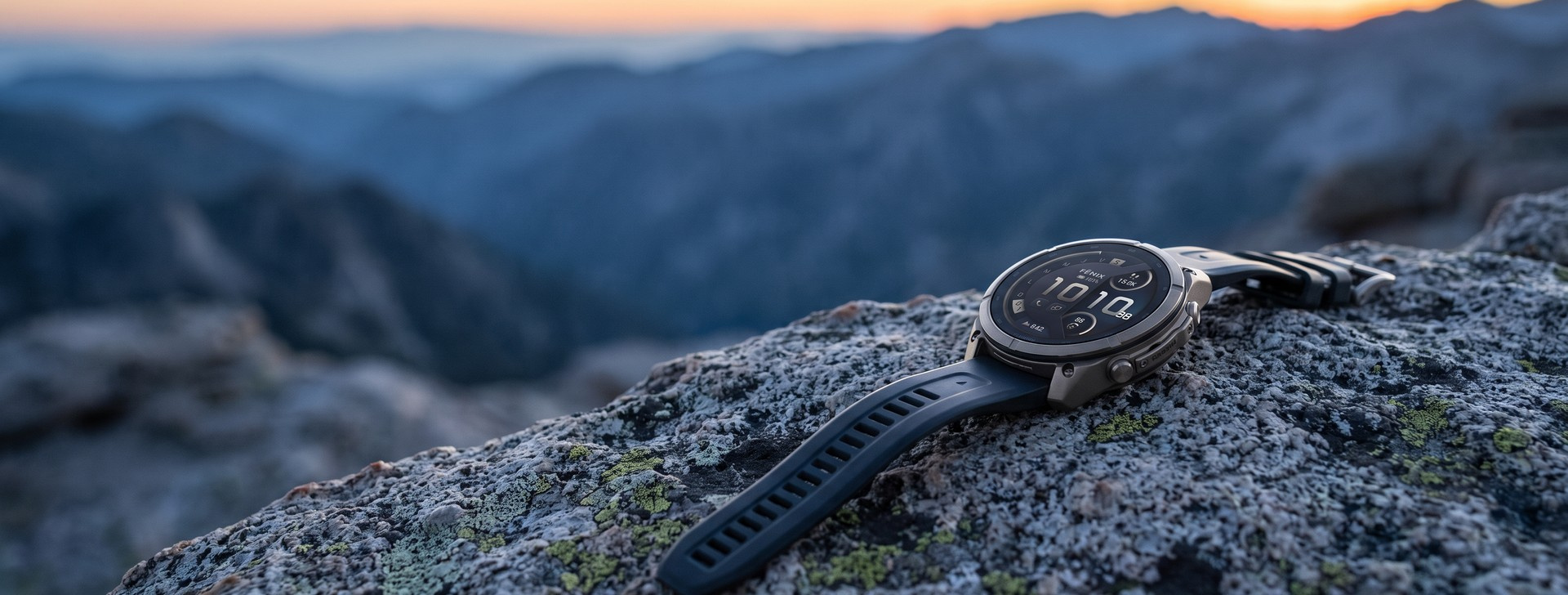
Five configurations across three case sizes, plus a long list of features and options: the Garmin Fenix 9 range can look daunting. It comes down to three questions, and the first step is to spot which of them concerns you: Fenix 9 vs Fenix 9 Pro, satellite or not, solar display or AMOLED. Each one closes off part of the grid, and the size is chosen afterwards, against a wrist. Here is the order in which we ask them.
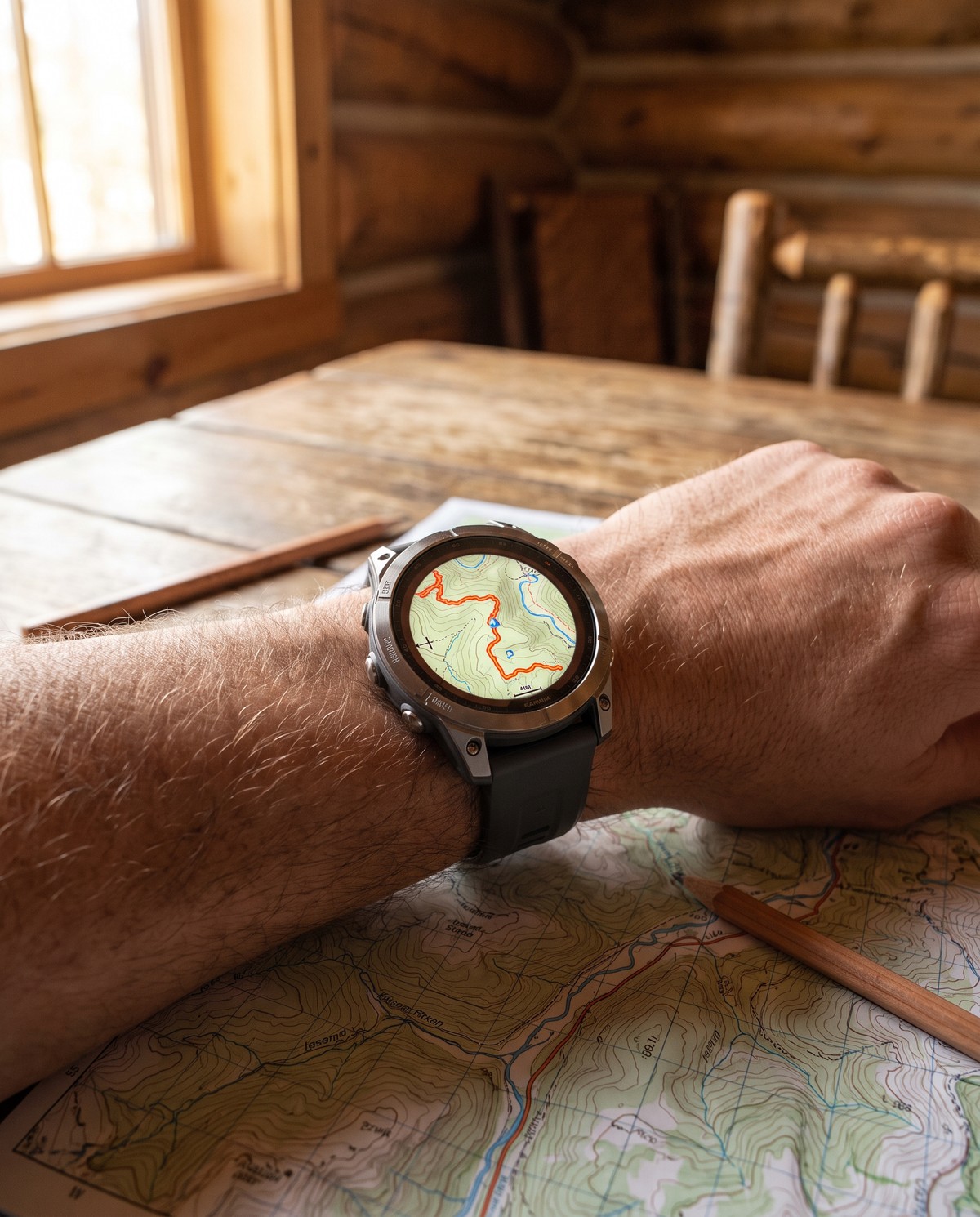
The Fenix 9 range is made up of five configurations offered in three case sizes, which makes thirteen combinations: three in 43 mm, five in 47 mm, five in 51 mm. All of them carry the same health and navigation sensors. Everything else is a choice, starting with the size, the display type and satellite.
Our most frequent answer remains the standard Fenix 9 in 47 mm for hiking, sport and everyday tracking. The Pro makes sense if you want titanium and maximum legibility in full sun. inReach is for people who leave network coverage for hours at a time.
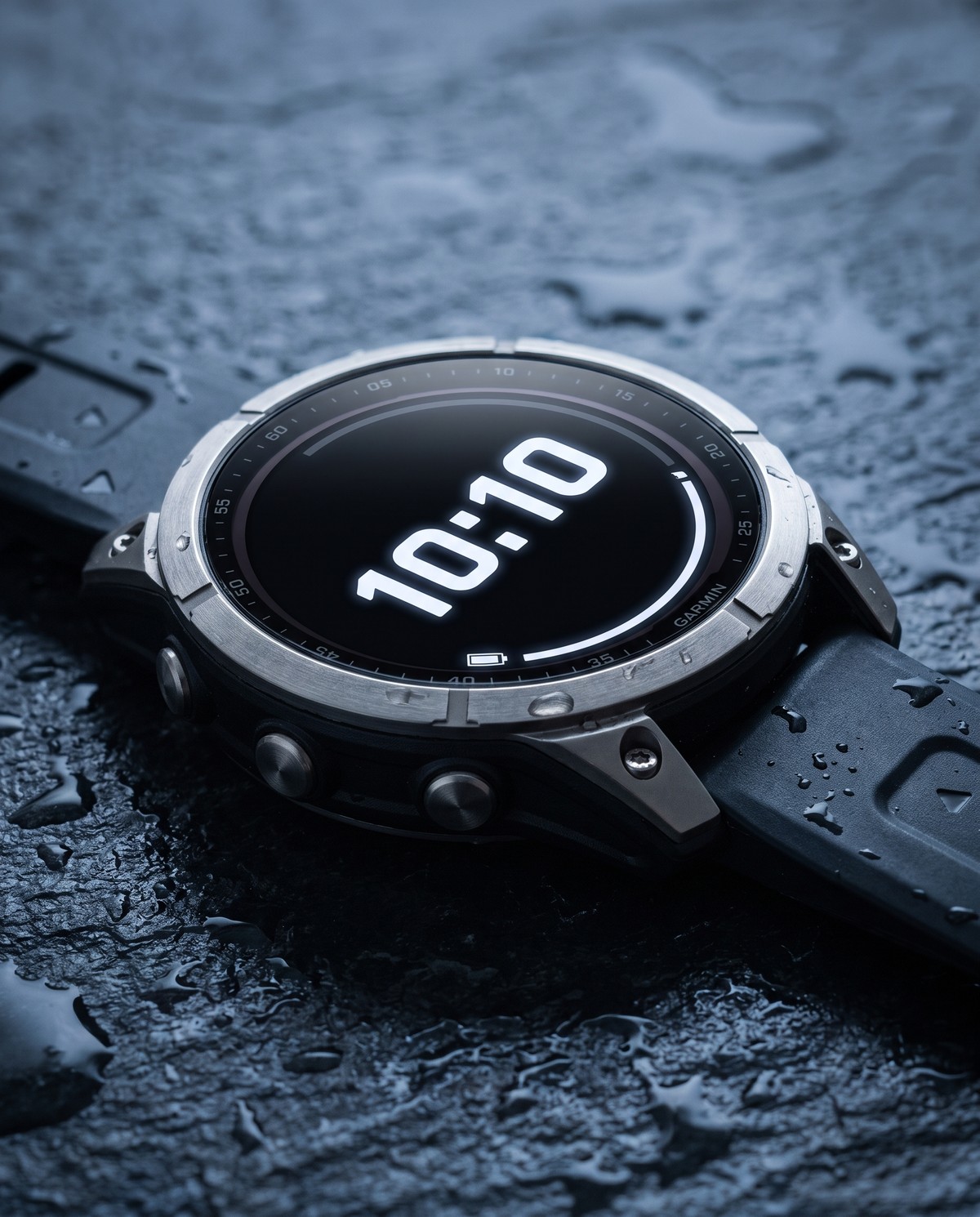
Comparison tables skip the most concrete point. The standard Fenix 9 has a fibre-reinforced polymer case with a titanium rear cover. The bezel is titanium across the range. The Pro is the one with an all-titanium case, and it shows on the scales as much as on the spec sheet.
In 43 mm, the Pro weighs 62 g against 61 g for the standard, and its thickness drops from 13.8 to 13.3 mm: titanium is heavier than polymer but can be machined thinner. In 51 mm the trade-off reverses. The Pro rises to 99 g against 91 g, and to 15.8 mm against 14.7 mm, and it houses a larger display.
The display is the other half of that €100. Both watches use AMOLED, but the Pro goes up to 3,000 nits of brightness, a useful reserve when you read a map at midday on a scree slope. The gain in screen area only concerns the 51 mm: there the Pro moves to a 1.5-inch (38.1 mm) display at 466 x 466 pixels, against 1.4 inches and 454 x 454 pixels for the standard. In 43 and 47 mm, the two watches have the same display size and resolution.
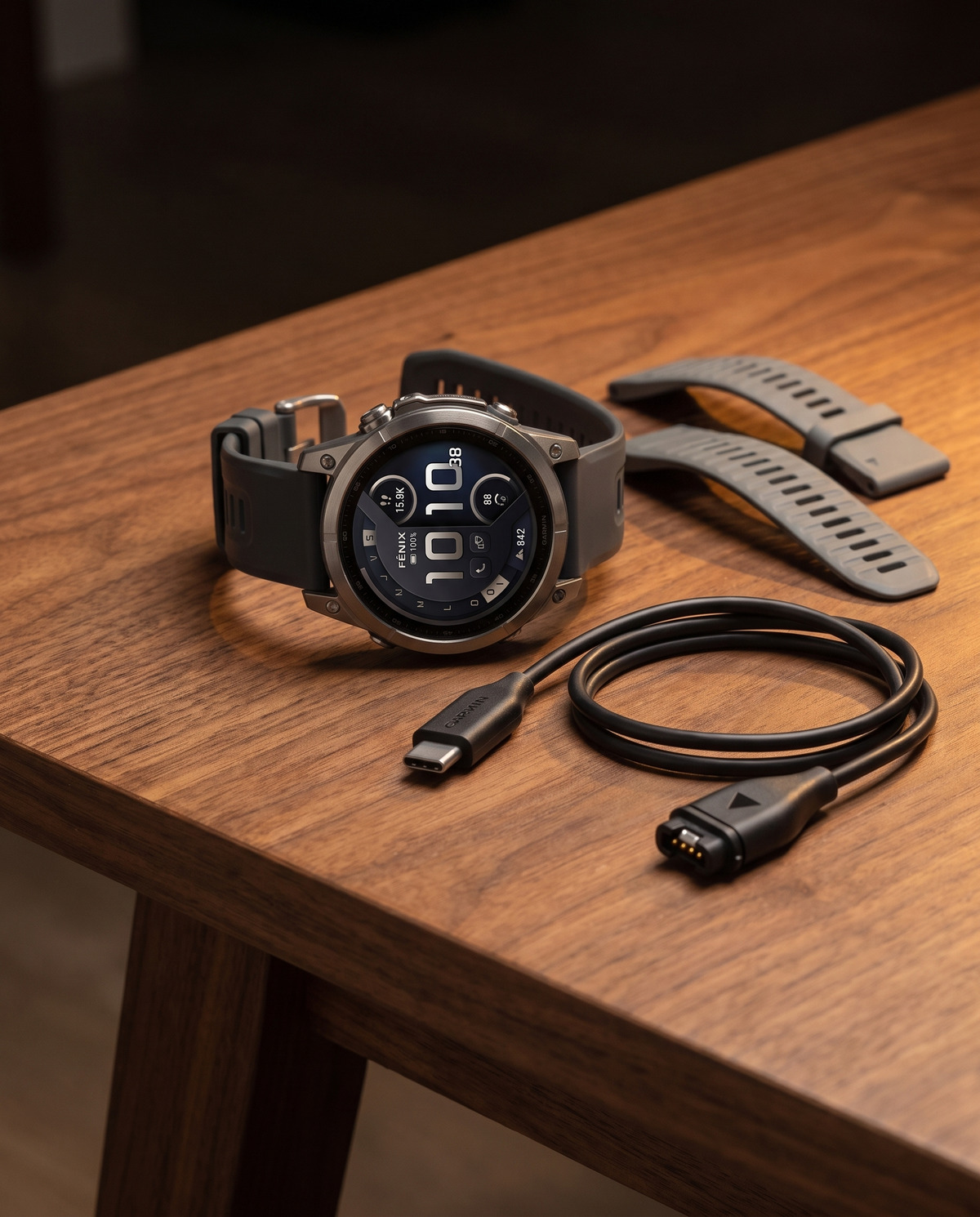
The rest does not move. Sapphire crystal lens, 64 GB of storage, multi-band GPS with SatIQ technology, built-in mapping, Pulse Ox, LED flashlight, Garmin Pay, a 10 ATM water rating and a depth sensor rated to 40 metres with the Bühlmann ZHL-16c model. From the watch, calls and voice-dictated texts go through the paired phone over Bluetooth on both; only the inReach versions carry LTE. A standard Fenix 9 is still a complete Fenix.
The ECG app is the only health feature in the range with medical device status: Garmin declares it a Class IIa medical device under EU regulation 2017/745, for detecting signs of atrial fibrillation. It is listed on all thirteen combinations, standard included. Garmin states that the app is not available in all regions. A reading is not a diagnosis and does not replace medical advice.
And the Pro opens a door the standard does not have: it is the only one of the two that exists in an inReach version. If satellite interests you, the titanium question is already settled.
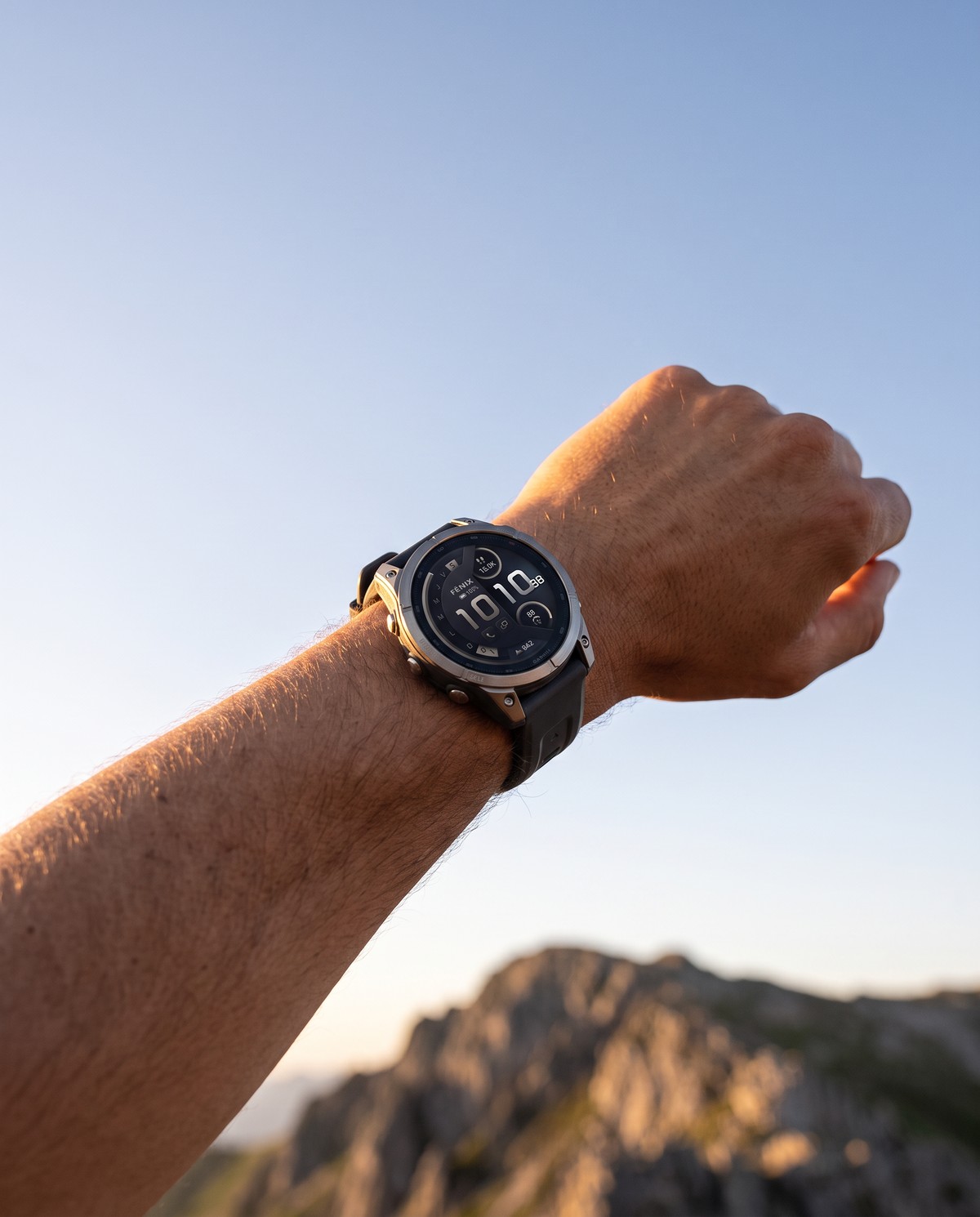
inReach adds a communication service where there is no network left. The official Fenix 9 series manual describes how it works in plain terms, and that description is a better basis for the decision than the idea most of us have of satellite messaging.
The link goes through geostationary communication satellites, fixed in the sky and much farther away than the GNSS satellites used for navigation. You feel it in the gesture: Garmin asks you to stop moving, find a clear view of the sky, aim the watch with the pointing interface and tilt it to the elevation angle. Allow thirty seconds or more to establish the connection, even when the signal is good. If it fails, the manual suggests taking the watch off your wrist and pointing the back of the case towards the satellite.
Some functions never go up by satellite. SOS, check-in messages, Messenger text messages and inReach weather forecasts do. Photo messages, voice messages, calls, LiveTrack, assistance and incident detection still depend on LTE or on the phone.
Satellite coverage is regional. Garmin's coverage list names most of Europe, the United Kingdom and Ireland included, the United States excluding Alaska and Hawaii, and parts of Canada; above 65 degrees north, the satellites can sit below the horizon. LTE coverage depends on the country and on roaming agreements.
The most important point fits in one line: an active inReach subscription is required for messaging, tracking, weather and SOS. Plans are monthly, and Garmin lets you move between plans as your needs change or suspend the service at no cost when you do not need it. A Fenix 9 Pro inReach without a subscription remains a complete GPS watch, with a silent satellite link.
| Your activity | Is inReach worth the €100? |
|---|---|
| Gym, city running, bike commuting | No. The mobile network covers the whole route. |
| Day hikes in mid-altitude mountains | Rarely. The phone often finds a signal again on the ridges. |
| Long trail runs, outings in an isolated valley | Worth considering, especially solo and out of season. |
| Multi-day treks, mountaineering, adventure races | Yes. This is the situation the service exists for. |
| "Just in case", with no matching activity | No. The subscription runs every month, the watch does not. |
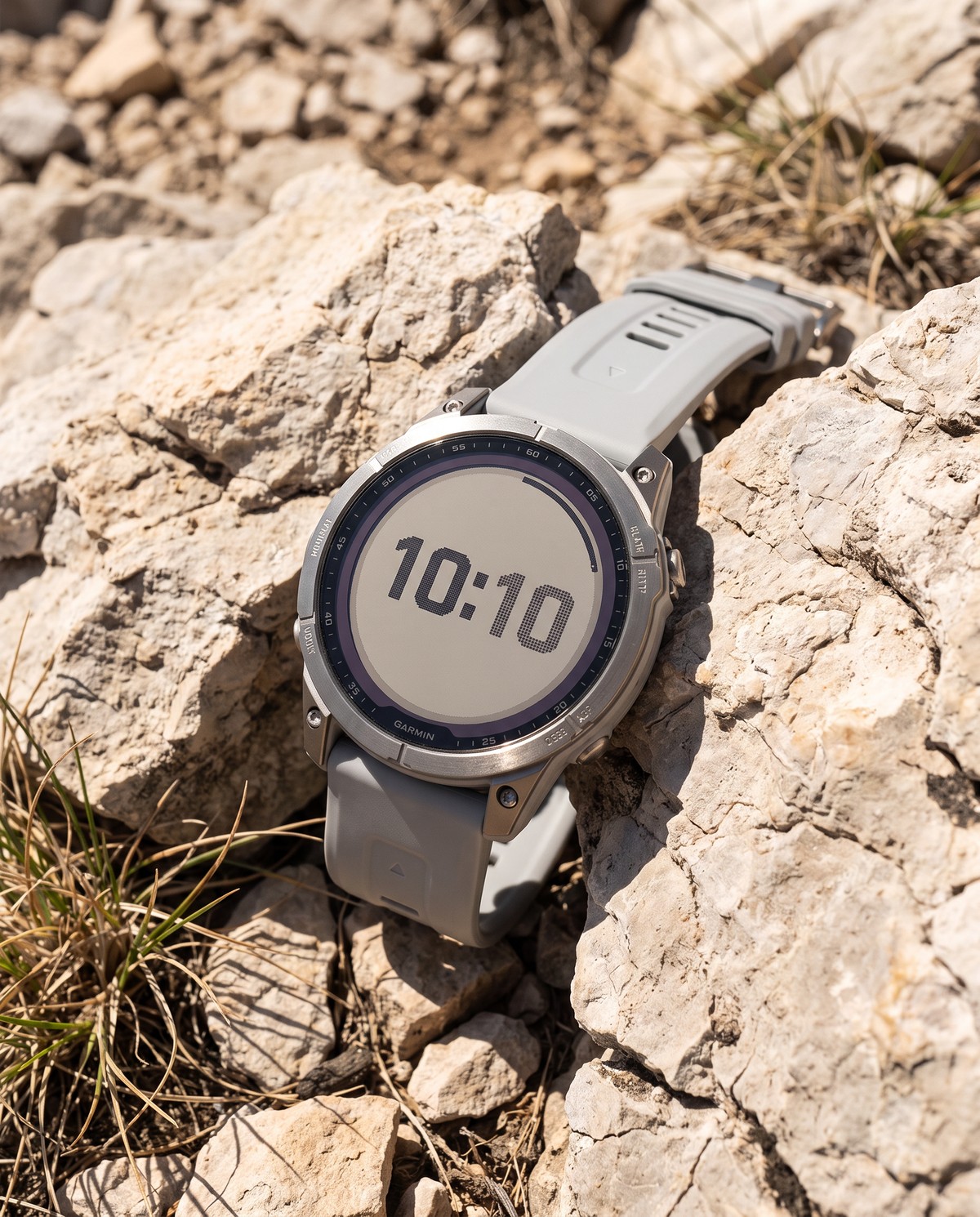
The display is what opens the battery-life gap between versions. An AMOLED produces its own light. The transflective MIP display of the Solar versions reflects ambient light: the harder the sun, the easier it is to read, and it draws far less power. The lens changes name along the way, from sapphire crystal to Power Sapphire, which integrates the solar-charging layer.
The gap is measured in 51 mm. The Pro AMOLED lasts 31 days in smartwatch mode. The Pro Solar lasts 30 days without sun, and up to 57 with solar charging. In expedition mode, the AMOLED stays at 31 days; the Pro Solar reaches 42 days, the inReach version 54, and both reach 124 with solar charging. The trade-off is a lower resolution, 280 x 280 pixels against 466 x 466, and a case of 16.6 mm for 102 g.
One detail matters. Garmin calculates these solar figures on three hours a day outside, in 50,000 lux conditions. It is a field figure: a day of walking reaches it, a day at the office does not. Solar is chosen on the number of consecutive days spent away from a socket, never on principle.
Solar is only offered on the Pro, in 47 and 51 mm. At Garmin it exists with or without inReach; in our catalogue it comes on the two inReach versions. For a MIP display without satellite, the previous generation remains an option, which we detail in our Fenix 9 vs Fenix 8 comparison.
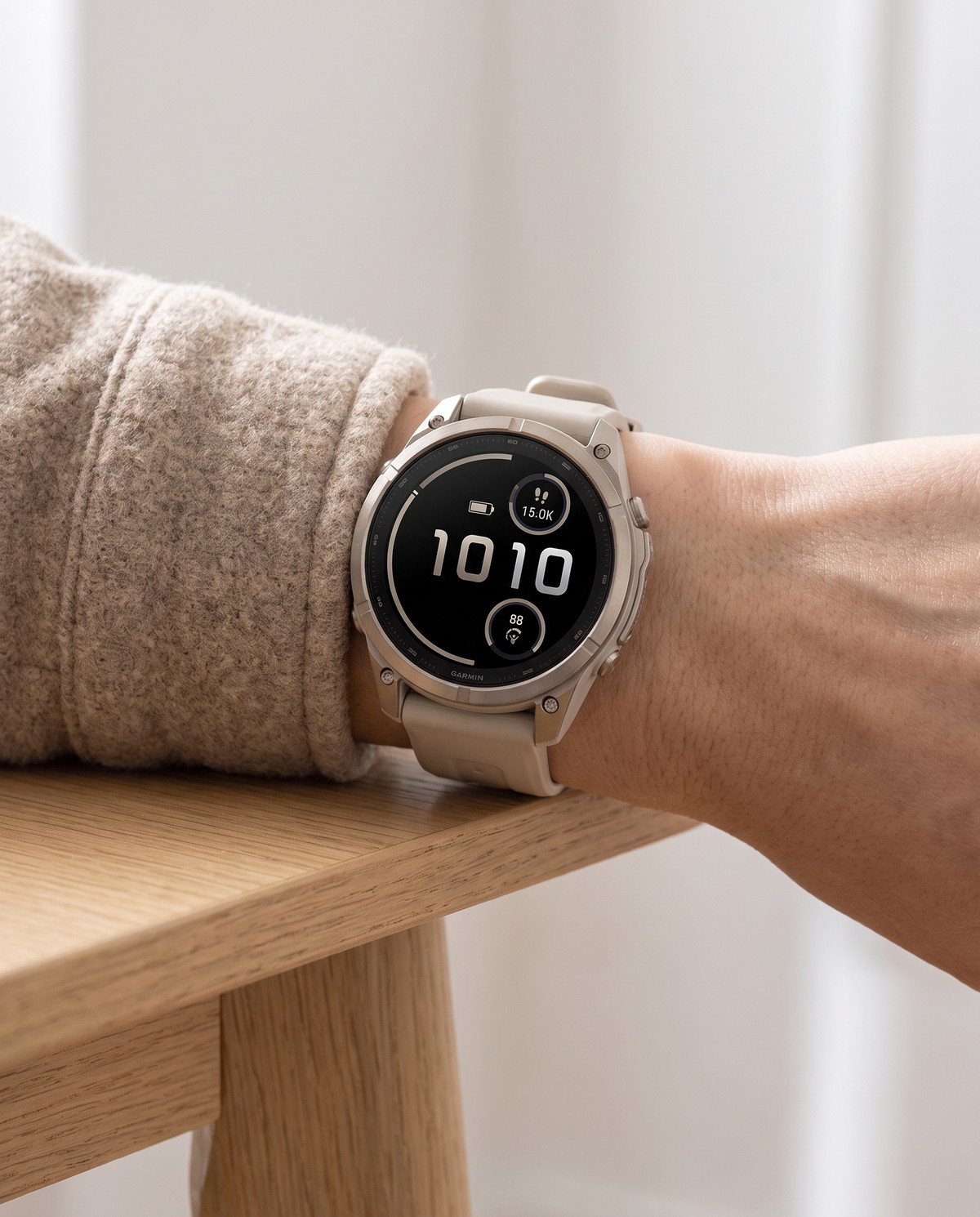
This question is settled with a tape measure, and an opinion will not help. For each size Garmin publishes the wrist circumference its bands cover, and it is the most useful figure on the whole spec sheet.
| Size | Silicone band | UltraFit band | QuickFit width |
|---|---|---|---|
| 43 mm | 108 to 182 mm | 108 to 189 mm | 20 mm |
| 47 mm | 125 to 208 mm | 125 to 215 mm | 22 mm |
| 51 mm | 127 to 210 mm | 127 to 225 mm | 26 mm |
The reading is clear. Under 125 mm of wrist circumference, only the 43 mm closes properly, and the question is settled. Above that, and up to 182 mm, all three sizes fit: the choice becomes a matter of display, weight and battery life again. Beyond 208 mm, the silicone band of the 47 mm no longer closes. The band of the 51 mm holds up to 210 mm; the UltraFit goes further, 215 mm in 47 mm and 225 mm in 51 mm.
Size by size, AMOLED versions first: the 43 mm has a 1.3-inch display at 416 x 416 pixels, weighs 61 to 62 g and lasts 10 days in smartwatch mode. The 47 mm moves to 1.4 inches at 454 x 454 pixels, for 75 to 78 g and 16 to 18 days. The 51 mm reaches 29 or 31 days, with 91 to 99 g on the wrist. In GPS activity the gap is of the same order: 18 hours in 43 mm, 30 to 32 hours in 47 mm, 54 to 56 hours in 51 mm.
The Solar versions follow another grid. The 47 mm weighs 84 g and lasts 21 days, the 51 mm 102 g and 30 days; with solar charging, count 34 and 57 days. The MIP display is the trade-off.
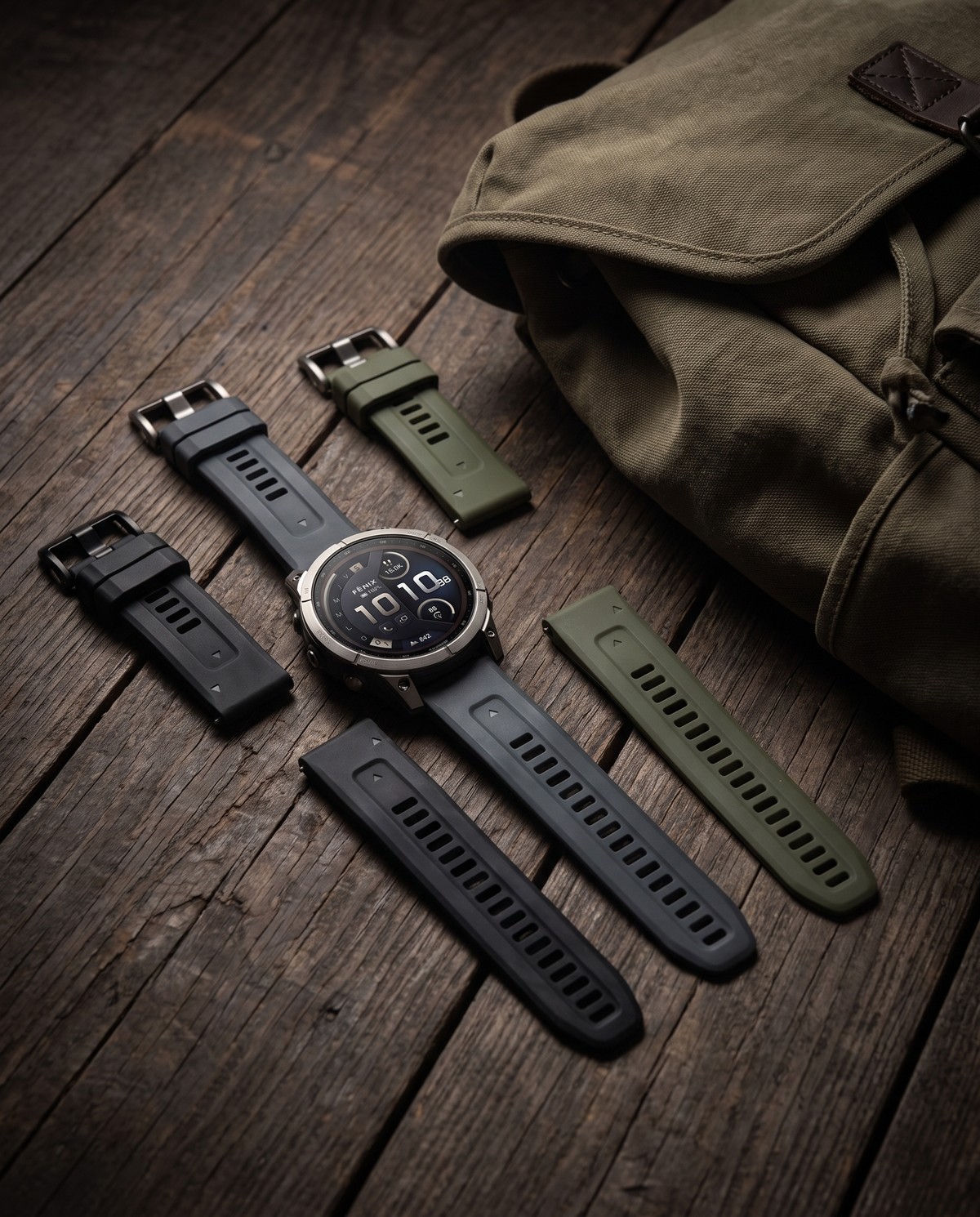
Good news for slim wrists. The Fenix 9 Pro inReach exists in 43 mm, which puts satellite messaging in the smallest of the three cases. To change style in a few seconds, our QuickFit bands for Garmin fit without tools.
The table lists the thirteen combinations with their entry price in euros, recorded on 7 September 2026. Finishes cost extra: €50 for DLC titanium or gold-tone titanium, more for the leather-strap versions.
| Configuration | 43 mm | 47 mm | 51 mm |
|---|---|---|---|
| Fenix 9 | €999 | €999 | €1,099 |
| Fenix 9 Pro | €1,099 | €1,099 | €1,199 |
| Fenix 9 Pro Solar | not offered | €1,099 | €1,199 |
| Fenix 9 Pro inReach | €1,199 | €1,199 | €1,299 |
| Fenix 9 Pro inReach Solar | not offered | €1,199 | €1,299 |
Solar does not exist in 43 mm: the two matching cells of the table stay empty at Garmin.
From our catalogue, size by size: in the standard version, the 43 mm in natural titanium at €999, the 47 mm in DLC titanium at €1,049 and the 51 mm in DLC titanium at €1,149.
In the satellite version, the Pro inReach 43 mm in titanium at €1,199, the Pro inReach 47 mm in titanium at €1,199 and the Pro inReach 51 mm in titanium at €1,299. Each also exists in DLC titanium and on a leather strap; the 43 mm adds a gold-tone titanium. For solar, the Pro Solar inReach 47 mm and the Pro Solar inReach 51 mm.
Two bundles that we put together complete the selection: the watch comes with its original silicone band and a QuickFit leather band, both in the same box, as the Fenix 9 47 mm in DLC titanium at €1,149 and the Fenix 9 51 mm in DLC titanium at €1,249. The second band works out at €99, about fifty euros less than bought separately. Leather for the week, silicone for the outing and for water.
We are an official Garmin retailer: on the brand's references, prices are the ones Garmin recommends, the warranty is Garmin's two-year warranty, and the whole series is on our Fenix 9 category page and in our Garmin brand section. Product pages are in French and prices are in euros.
The Pro has an all-titanium case where the standard Fenix 9 has a fibre-reinforced polymer case with a titanium rear cover, and its AMOLED display reaches up to 3,000 nits. It is also the only one of the two offered with inReach or with a solar display. In 51 mm it has a larger 1.5-inch display. Sensors, mapping, storage and dive features are the same on both.
It is if you want an all-titanium case, brightness pushed to 3,000 nits, or access to the inReach version. In 51 mm it also brings a 1.5-inch display at 466 x 466 pixels. For sport and hiking without satellite, the standard does the same job with the same sensors.
Both close: at 160 mm you are within the range of the silicone band of the 43 mm (108 to 182 mm) and of the 47 mm (125 to 208 mm). Decide on use: the 43 mm goes unnoticed at night and under a sleeve, the 47 mm gives a larger map and six to eight more days of battery life.
The 43 mm, whose band goes down to 108 mm of wrist circumference when the other two sizes stop at 125 and 127 mm. It exists as a standard Fenix 9 at €999 and as a Pro inReach from €1,199, which makes satellite messaging available without a large case.
No. Garmin makes messaging, tracking, inReach weather and SOS conditional on an active inReach subscription. Plans are monthly, and you can move between them or suspend the service at no cost.
Yes, Garmin offers one in 47 and 51 mm, at €1,099 and €1,199. In our catalogue, solar comes on the two inReach versions; write to us if the Solar alone is the one you want.
In 51 mm, the Pro AMOLED lasts 31 days in smartwatch mode and the Pro Solar 30 days without sun, up to 57 days with solar charging. Garmin bases the solar figures on three hours a day outside in 50,000 lux conditions. The Solar display is a MIP display at 280 x 280 pixels, against 466 x 466 for the AMOLED.
The ECG app is listed on all thirteen combinations of the range, standard Fenix 9 included. Garmin declares it a Class IIa medical device under EU regulation 2017/745 and states that it is not available in all regions.
The whole range has a 10 ATM water rating, and a depth sensor rated to 40 metres for diving.
That is another question, and we gave it a full article: our Fenix 9 vs Fenix 8 comparison goes through display, battery life and build, generation by generation. If yours has just arrived, our guide to getting started with a Garmin watch (in French) will save you an evening.
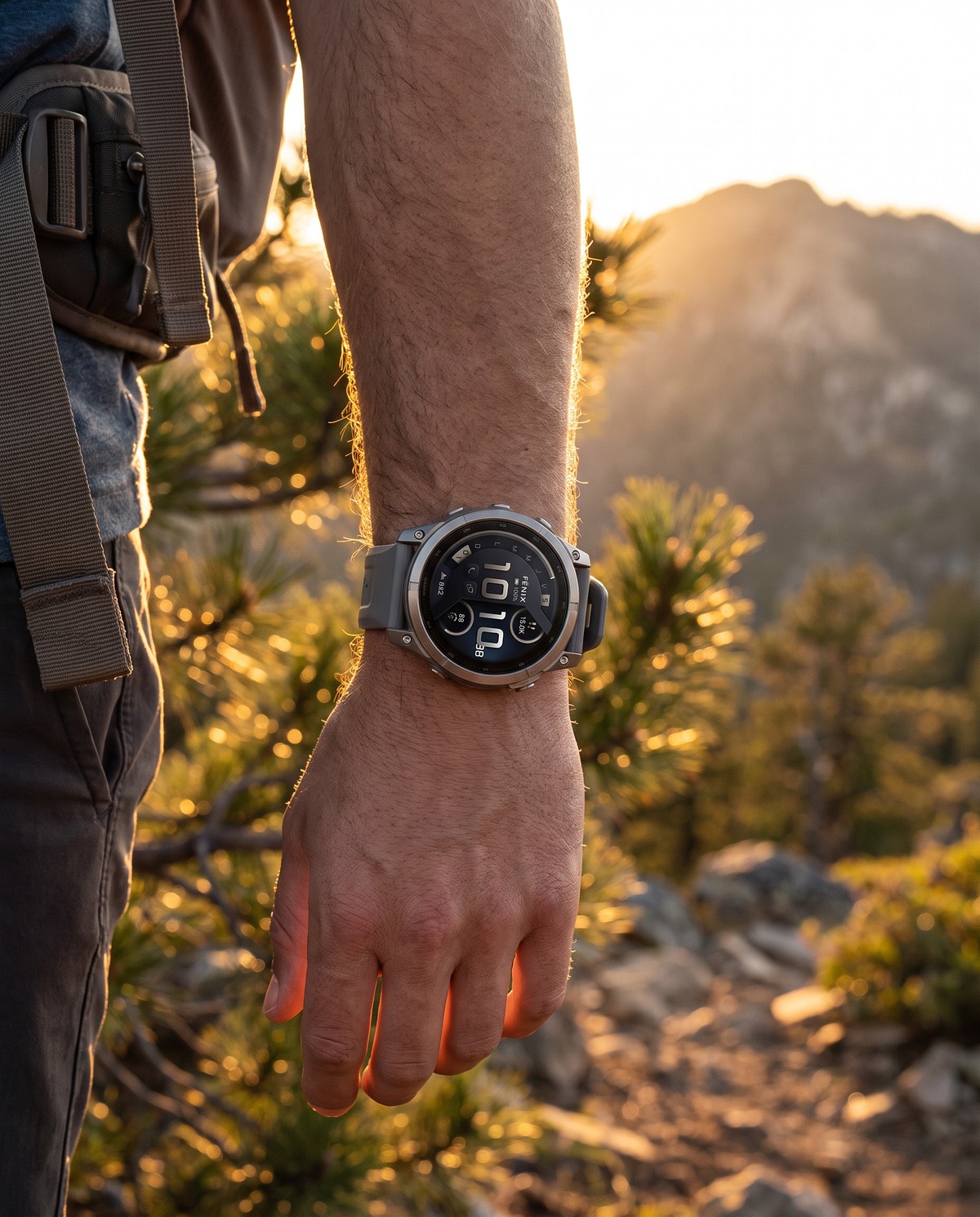
The configuration we recommend most often is the 47 mm. It is the size that gives a real map without weighing on the wrist, and it costs the same as the 43 mm in the standard version. Between the standard and the Pro, we gladly leave titanium to those who want it for its own sake: sensors, mapping and diving to 40 metres are identical on both.
On inReach we prefer a straight answer. The service is remarkable, and it costs money every month. If your outings leave you reachable, keep the €100 for a second QuickFit band. If they take you off the network for a whole day, the question no longer arises.
Three questions, and most often two of the answers are no. The range gets simpler that way.
We ship internationally with DHL. Our Fenix 9 selection is online, and we welcome you in our two shops in Thionville, France, to talk it through.