Cart (0)
Your cart is empty


Your cart is empty
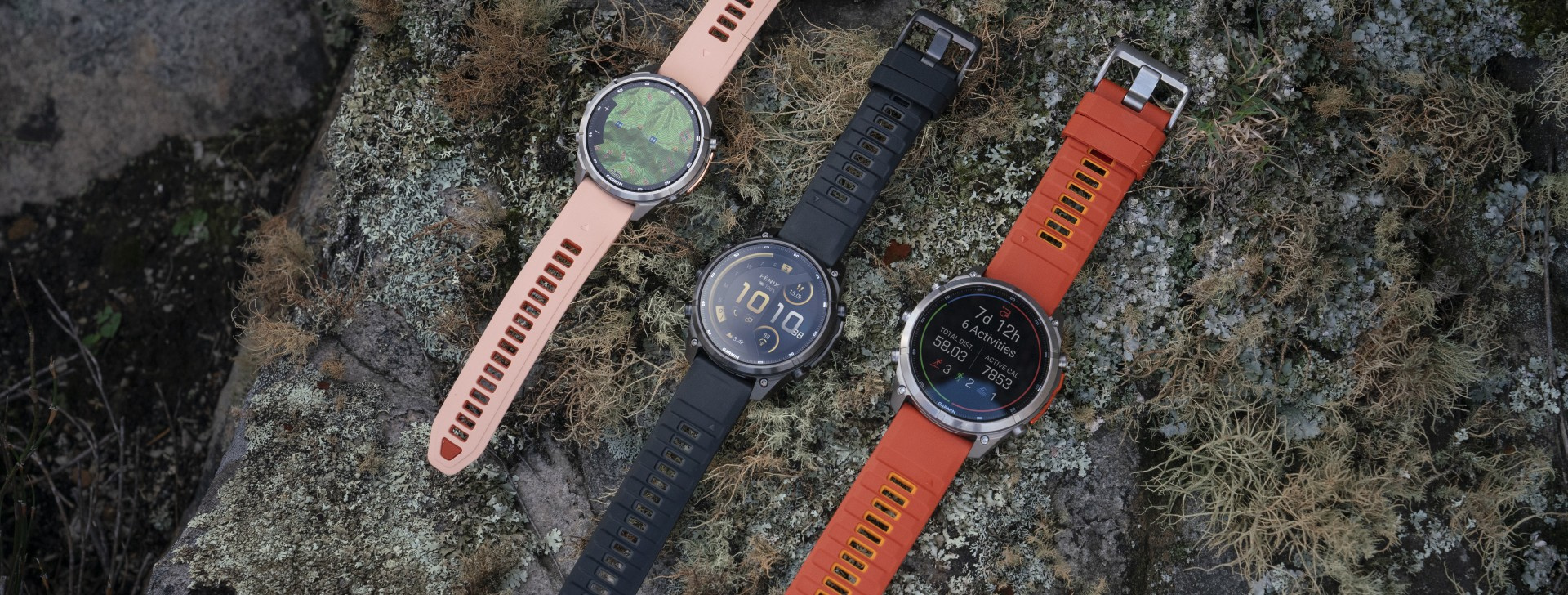
Garmin unveiled the Fenix 9 on 25 August 2026. On the wrist of the athlete reading this page, a Fenix 8 tells the same time it did the day before, its routes loaded, its flashlight still handy in the corridor of a mountain hut. One thing decides the purchase: what this generation changes on your outings, and whether that change is worth the money. We compared the Fenix 9 vs Fenix 8 the way you pack a rucksack, weighing every item.
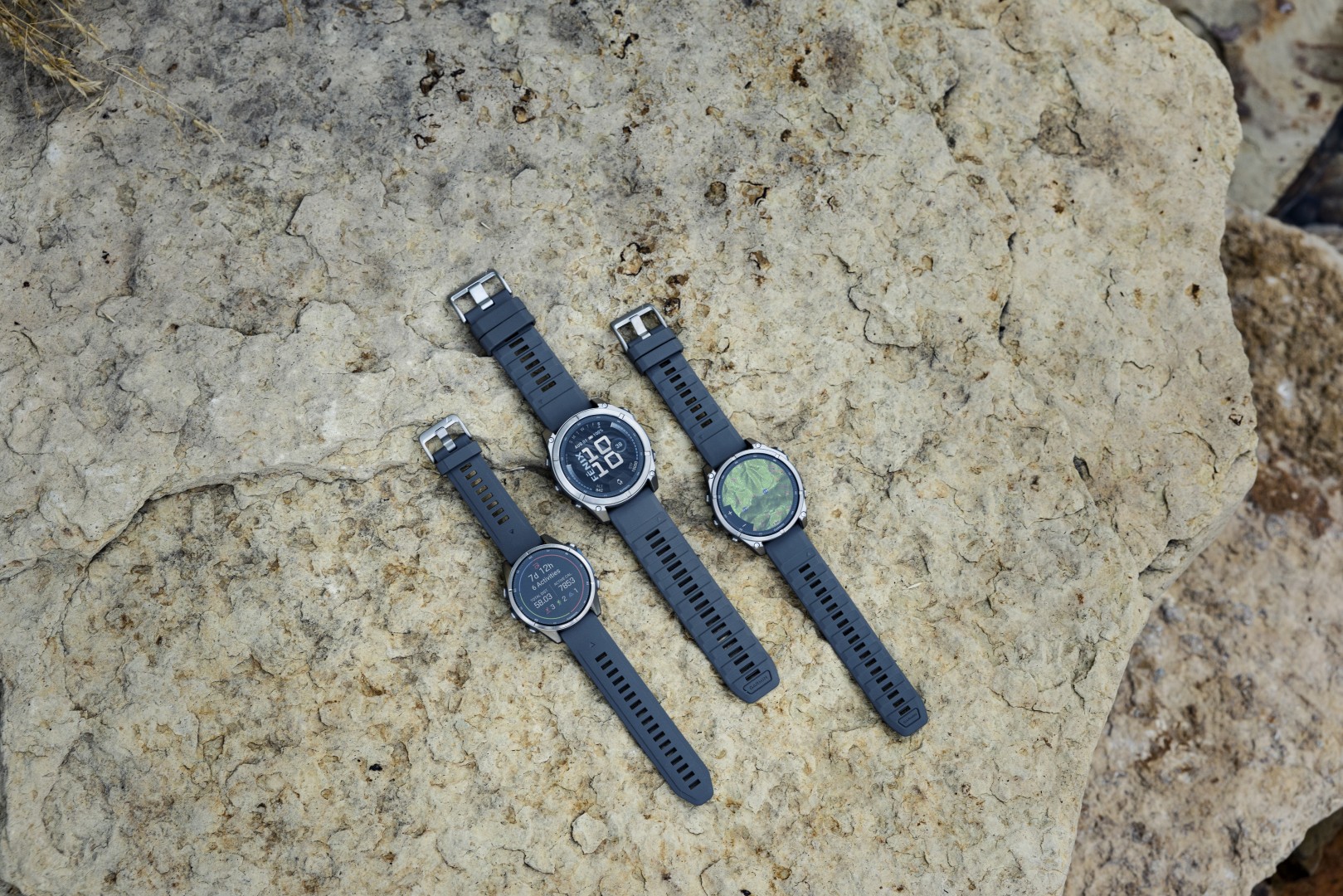
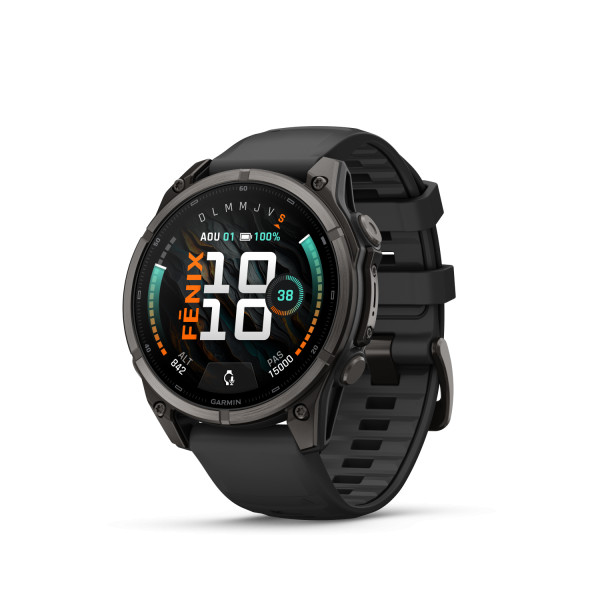
The Fenix 9 comes in three families and three sizes (43, 47 and 51 mm): the Fenix 9 with an AMOLED display (€999.99 to €1,149.99), the Fenix 9 Pro with an all-titanium case (from €1,099.99, inReach versions with LTE and satellite communication from €1,199.99) and the Fenix 9 Pro Solar with a solar-charging transflective MIP display, in 47 and 51 mm, offered with or without inReach (in our catalogue in the inReach version, at €1,199.99 and €1,299.99). The whole range gets a sapphire crystal lens, a titanium bezel, 64 GB of storage, TopoActive mapping and dive features down to 40 metres. The Fenix 8 stays in our catalogue at repositioned prices. Your training history lives in your Garmin Connect account and follows you from one generation to the next.
| Your situation | Our advice |
|---|---|
| Fenix 7 or older, heavy use | Move to the Fenix 9: two generations apart, a much brighter display, 64 GB, and satellite communication as an option on the Pro inReach models |
| Recent Fenix 8, happy with it day to day | Keep it, unless you specifically need satellite or the titanium case: the standard Fenix 9 has the same battery life as your watch |
| First purchase, on a budget | The Fenix 8, repositioned since the announcement: a platform matured by nearly two years of updates, from the 43 mm AMOLED to the 51 mm Solar |
| Trekking and multi-day routes off the grid | The Fenix 9 Pro inReach, or the Pro Solar inReach 51 mm and its battery life of up to 57 days with solar charging (worn outdoors about 3 h a day) |
| Criterion | Fenix 9 | Fenix 9 Pro | Fenix 8 |
|---|---|---|---|
| Display | AMOLED, announced as more than twice as bright as the Fenix 8 | AMOLED up to 3,000 nits (1.5 in and 466 x 466 px on the 51 mm), or solar-charging transflective MIP on the Pro Solar versions | AMOLED, or solar-charging transflective MIP depending on the version |
| Lens | Sapphire crystal | Sapphire crystal (Power Sapphire on Solar) | Gorilla Glass or sapphire depending on the edition |
| Case | Reinforced polymer, titanium case back and bezel | All titanium, announced by Garmin as a first for the range | Reinforced polymer, steel or titanium bezel depending on the edition |
| Storage | 64 GB | 64 GB | 32 GB |
| Battery life, smartwatch mode (47 mm) | Up to 16 days | Up to 18 days; Pro Solar inReach 51 mm: up to 30 days, 57 with solar charging (worn outdoors about 3 h a day) | Up to 16 days; Solar 51 mm: up to 30 days, 48 with solar charging |
| Battery life, GPS activity (47 mm) | Up to 30 hours | Up to 32 hours (56 hours on the 51 mm) | Up to 47 hours in GPS-only mode, 35 hours with all systems + multi-band (84 and 62 hours on the 51 mm) |
| Communication | Calls from the wrist via a paired smartphone | inReach versions: LTE (calls, texts, LiveTrack, weather) and satellite (messaging, SOS), subscription required | Calls from the wrist via a paired smartphone; the Fenix 8 Pro adds LTE and inReach satellite |
| LED flashlight | White and red | White, red and green | White and red |
| Launch price | €999.99 to €1,149.99 | €1,099.99 to €1,399.99 depending on the finish | On promotion in our catalogue as of 26 August 2026 |
Garmin renamed its battery modes between the two generations, so the labels do not line up exactly. One benchmark stays stable for comparison, the maximum battery mode: 81 hours on the 47 mm and 145 hours on the 51 mm, on both generations.
On an ultra, recording time drives the choice. The Fenix 9 lasts up to 30 hours of GPS activity in 47 mm and 54 hours in 51 mm; the Pro reaches 32 and 56 hours. Thirty hours of racing, two sunrises, a screen that has to be read at a glance at kilometre 140: that is the brief these figures cover. Set them against your target finishing time, margin included.
On a multi-day trek, the map and the charge matter more. Multi-continent TopoActive maps live in the watch, contour lines included, with no need for the phone. This generation works on the engine more than the toolkit: Garmin announces smoother maps, with panning up to 30% faster. The tools proven on the 8 (dynamic round-trip routing, the NextFork map guide, grade-adjusted pace) are still on board. On battery, the Pro Solar inReach gives a trek what it needs: up to 54 days in expedition mode on the 51 mm, and 124 with solar charging (worn outdoors about 3 hours a day in full sun, at 50,000 lux), a real top-up that depends on the time you spend outside.

On a day hike, the useful habits were already there on the Fenix 8: the flashlight lights the bottom of the pack or the path on a late return, and the sealed metal buttons respond in the rain and through gloves. The Fenix 9 adds the build. A sapphire lens and a titanium bezel come on the whole range, standard version included, where generation 8 kept them for its Sapphire editions. Sapphire is highly resistant to scratches from rock and straps; wear ends up marking any material, which is one more reason to be glad it is now on every model. Water resistance reaches 10 ATM (100 metres), with dive features down to 40 metres (single-gas recreational diving on air or Nitrox, freediving and apnoea): the lake by the bivouac, with nothing to worry about. The case is tested to U.S. military standards for resistance to extreme temperatures, shock and water.
Then there is the week without sport, the one that judges a watch day to day. The standard Fenix 9 has the same battery life as the 8: ten days in 43 mm, sixteen in 47, twenty-nine in 51. On that precise point your Fenix 8 holds its own, and we would rather say so in writing. Generation 9 gains elsewhere: the display, the build, storage doubled to 64 GB (up to 7,000 songs, twice as many maps on board), communication. The Pro also lasts longer, with 18 days in 47 mm and 31 in 51 mm.
The usage benchmarks in this section come from previous generations: the Fenix 9 will have to confirm them in the field. Garmin puts the display, the titanium and the communication forward; our advice on measurement does not change.
Optical heart rate at the wrist is very good for running and cycling at a steady pace. It loses accuracy when the effort turns irregular: intervals, sharp changes of pace, strength training, where a firm grip and wrist flexion disturb the reading. For those sessions a chest strap beats the wrist. For a trail runner building speed on hill repeats, the wrist is enough for long runs and the strap remains the tool for hard sessions. The watch picks one up in a few seconds, over ANT+ or Bluetooth.
Heart rate variability only has validated value when it is averaged over the night: that is what you need to steer recovery through a training block or a run of trekking days. A daytime reading is noise at the slightest movement. The sound way to use it is to compare your own nights over several weeks, not to read one value on its own.
The VO2max on screen is an estimate, a marker of progress more than a lab result, and it becomes less reliable for highly trained athletes, which is exactly the ultra profile. The first source of error is a maximum heart rate entered wrongly. Followed over months, the curve tells you more about your progress than a single figure. The new feature of this generation is elsewhere: the rowing profile can now estimate a VO2max, provided you pair a device that supplies power.
Sleep reads the same way. Duration, regularity, trends: the tracking is solid and makes sense over time. The fine breakdown into sleep stages remains the weak point of the whole category, and we do not sell it as anything else. Garmin's own scores (Body Battery, Training Readiness, Stamina) are decision aids, useful as personal trends; Garmin itself presents them as estimates. One feature is in a different category: the ECG app, which can look for signs of atrial fibrillation, available in France since January 2025 (the app is restricted to adults aged 22 and over). It screens for signs; diagnosis remains a doctor's job. Everything else, skin temperature sensor and pulse oximeter included, is wellness tracking; medical-device status stops at the ECG app.
Trail and ultra. The Fenix 9 in 47 mm covers most race formats; the Fenix 9 51 mm and its 54 to 56 hours of GPS activity are for the very long ones. The new Stamina metrics (curve, zones, endurance contribution) finally show what is left in the legs, based on your training history. A Fenix 8 Solar remains a rational choice if you run long and watch the budget. To compare the models built for the trails, see our selection of trail watches.
Trekking and multi-day routes. This is where the inReach family earns its place: satellite messaging in areas with no network, interactive SOS linked to Garmin Response, a coordination centre open 24 hours a day, position sharing and weather. The inReach subscription is required for these functions and can be suspended for up to twelve months at a time, with no reactivation fee; coverage depends on the country. Count the satellite battery life honestly: in activity with LTE LiveTrack, the Pro lasts up to 16 hours in 47 mm and 27 hours in 51 mm. For several days away from a socket, the Pro Solar inReach 51 mm has the longest battery life in the range.
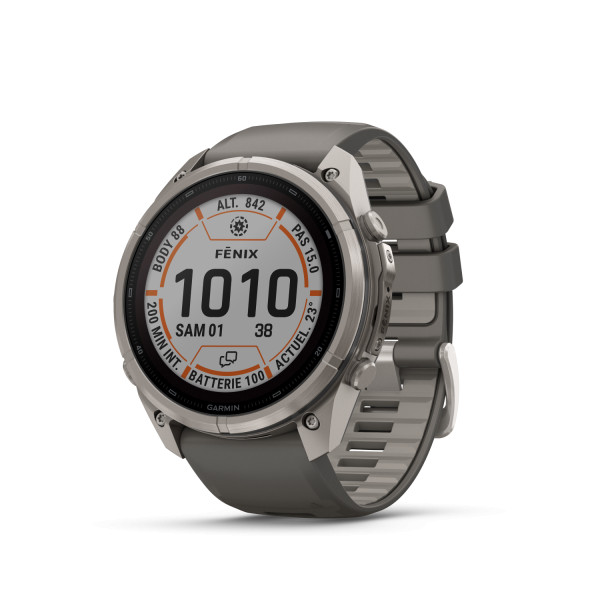
Regular hiking. The standard Fenix 9 is more than enough: map, barometric altimeter, 3-axis electronic compass, gyroscope, flashlight. Its multi-band GPS with SatIQ technology keeps its bearings in forest and at the bottom of a valley.
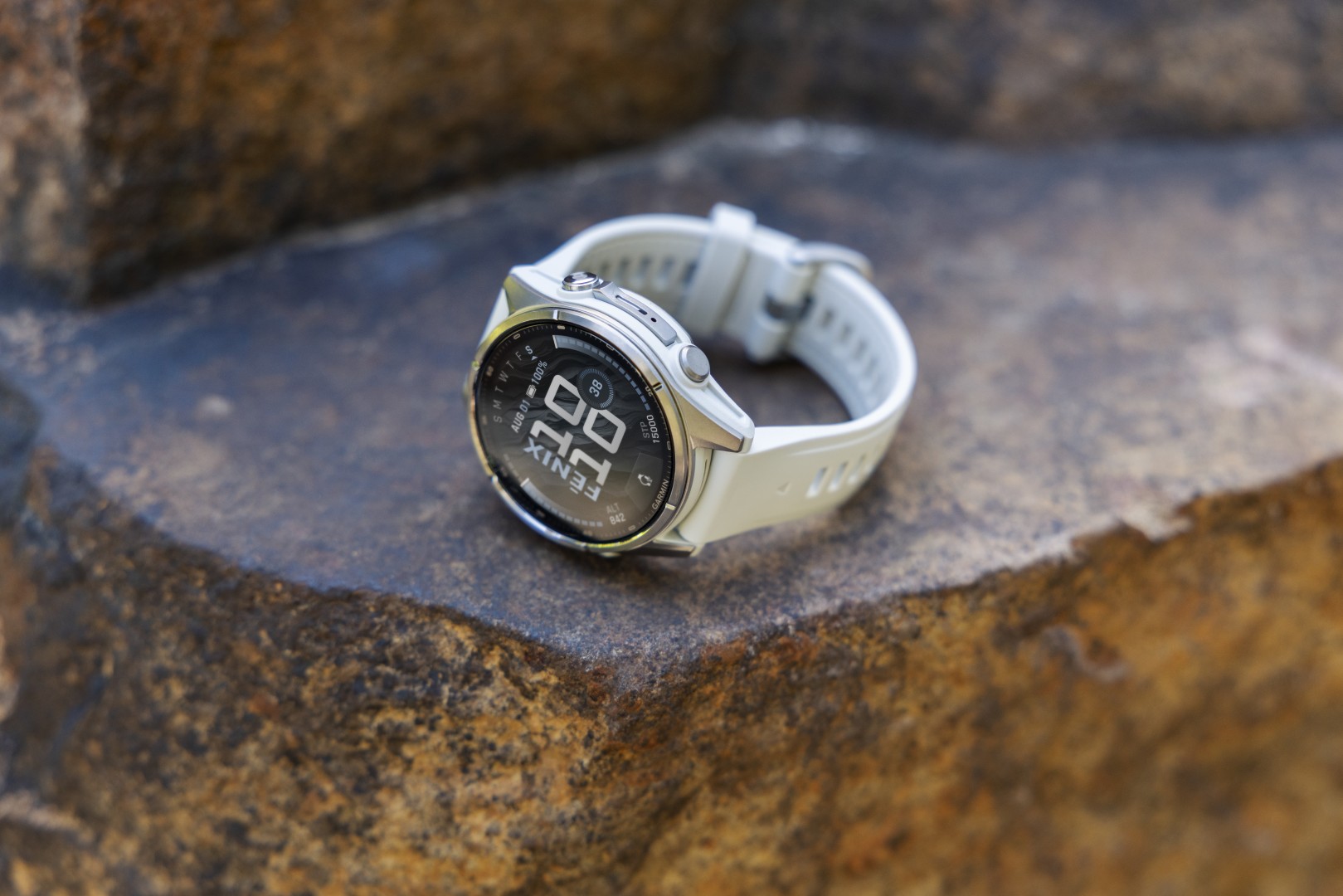
Triathlon and gym. Swim, bike and run on a single timer was already a given; this generation looks after profiles that were long secondary. Rowing, indoors and outdoors, gains dedicated data (up to FTP and lactate threshold, with a compatible rower) and simpler pairing. Rucking, walking with a weighted pack, lets you set a goal, adjust the carried weight during the activity and estimate the extra calories. There are more than 100 profiles in all, from golf (43,000 preloaded courses) to skiing (more than 2,000 resorts with SkiView piste maps), and on to archery with the new ArcheryX profile.
Everyday wear and health. The Fenix 9 43 mm stays discreet under a cuff, and the Pro 43 mm even slims down the previous generation's case (13.3 mm thick, 62 grams). Garmin Epic, also new, assembles several days of activities, photos and health data into a shareable story that covers a stage race or a whole trek.
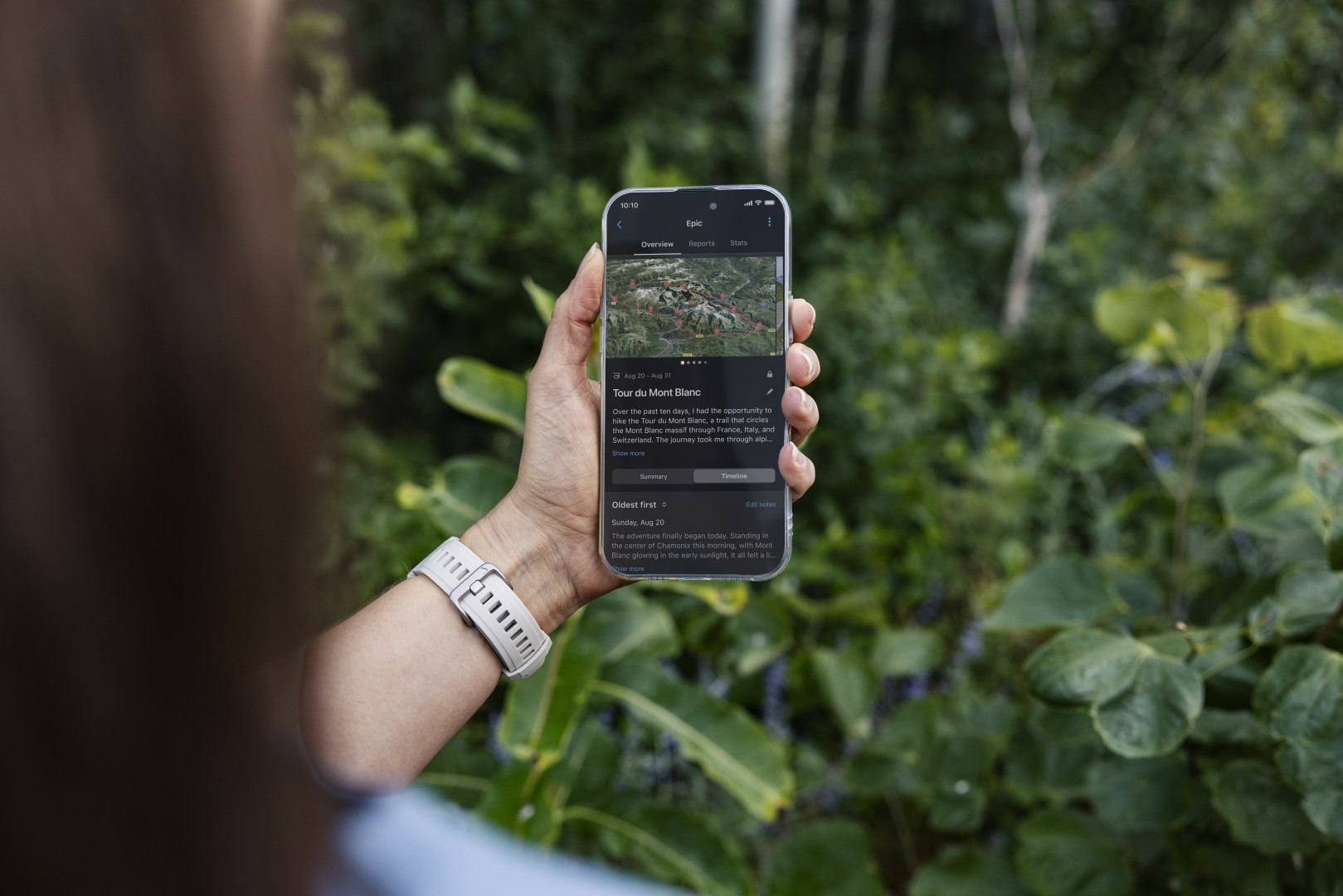
Changing generation does not reset your history. Garmin Connect keeps your years of data and carries them on with the new watch: records, physiological trends, training load. Your ANT+ and Bluetooth sensors carry over, from heart-rate strap to power meter, and so does the QuickFit quarter-turn bike mount. Straps stay on the QuickFit standard in 20, 22 and 26 mm depending on the case size.
A QuickFit strap swaps without tools; our range of Garmin watch straps has its own page.
That leaves timing. Garmin set 28 August as the opening date for orders across the range, and our Fenix 9 product pages are online. Every launch reshuffles the prices of the previous generation: our catalogue lists the Fenix 8 at repositioned prices. If your decision leans towards the 9, the launch price comes with an advantage the spec sheet does not show: generation 9's cycle of software updates has only just begun.
The Fenix 9 starts at €999 in 43 and 47 mm, the Pro at €1,099; inReach adds €100, the 51 mm case another €100, and solar does not change the price. That gives €999 to €1,299 at Garmin's public prices on 10 September 2026, before the choice of finish.
| Configuration | 43 mm | 47 mm | 51 mm |
|---|---|---|---|
| Fenix 9 | €999 | €999 | €1,099 |
| Fenix 9 Pro, and Pro Solar in 47 and 51 mm | €1,099 | €1,099 | €1,199 |
| Fenix 9 Pro inReach, and Pro Solar inReach in 47 and 51 mm | €1,199 | €1,199 | €1,299 |
In our catalogue, these are the prices of the base finishes: the 43 mm in natural titanium at €999, the Pro inReach 43 and 47 mm at €1,199, the 51 mm at €1,299. DLC titanium and gold-tone titanium add €50, leather-strap versions more, up to €1,399 for the Pro inReach 51 mm on leather. Each Garmin Fenix 9 watch in the selection shows its price on its product page, with Garmin's two-year warranty. Product pages are in French and prices are in euros. To choose between Pro, inReach and Solar size by size, our guide Garmin Fenix 9 vs Fenix 9 Pro: which to buy goes through the thirteen combinations and their product pages.
The Fenix 9 gains on the display (AMOLED announced as more than twice as bright), the build (sapphire lens and titanium bezel on the whole range, an all-titanium case on the Pro), storage (doubled to 64 GB) and communication (LTE and satellite on the inReach versions). Battery life on the standard Fenix 9 is the same as on the Fenix 8.
If your Fenix 8 is recent and you are happy with it day to day, keep it, unless you specifically need satellite communication or the titanium case. From a Fenix 7 or older with heavy use, the Fenix 9 is the move to make: two generations apart, a much brighter display and 64 GB of storage.
The Fenix 8 Pro added LTE and inReach satellite communication; on the Fenix 9 Pro they come with the inReach versions. The Fenix 9 Pro has an all-titanium case, which Garmin announces as a first for the range, and in 43 mm it slims down the previous generation's case (13.3 mm thick, 62 grams).
Garmin unveiled the Fenix 9 on 25 August 2026 and set 28 August as the opening date for orders across the range.
The inReach versions of the Fenix 9 Pro do: LTE (calls, texts, LiveTrack, weather) and satellite (messaging, SOS), with an inReach subscription. The standard Fenix 9 handles calls from the wrist through a paired smartphone.
Nothing is lost: the history belongs to your Garmin Connect account. Activities, personal records and physiological trends appear on the new watch as soon as it is paired, and your years of data keep feeding the load and recovery estimates.
Yes. The Fenix 9 connects over ANT+ and Bluetooth to heart-rate straps (including the HRM-600, which also transmits heart rate variability), to power meters such as Rally pedals, to indoor trainers and to the Varia rear camera light. It is also what we advise for interval sessions, where the strap remains more reliable than the wrist.
With more than 100 profiles, the list goes well beyond running and cycling: road and trail running, mountain biking, swimming, freediving and apnoea down to 40 metres, rowing indoors and outdoors, rucking with adjustable carried weight, golf with preloaded courses, skiing with SkiView piste maps, and more. Is your sport missing? Fenix watches have long let you create a custom activity directly on the watch.
Without inReach, yes; in 43 mm, no. Garmin offers the Fenix 9 Pro Solar with or without satellite communication, in 47 and 51 mm, and keeps the 43 mm size for AMOLED, as on the previous generation. In our catalogue, solar comes on the Pro Solar inReach 47 mm and its bigger sibling in 51 mm; if you want MIP without the communication layer, a Fenix 8 Solar from our catalogue will also do the job.
The watch is complete without it: GPS, mapping, training and health tracking work with no subscription at all. An active inReach subscription only governs the LTE and satellite communication functions (messaging, calls, LiveTrack, weather, SOS); it can be suspended for up to twelve months at a time, with no reactivation fee, and coverage varies by country.
Yes. Nearly two years of updates have matured it, its foundation (multi-band GPS, TopoActive mapping, diving to 40 metres, flashlight) is still that of a flagship, and its repositioned price makes it a very rational way into the Fenix family if you can do without satellite: our Fenix 8 category lists the repositioned references.
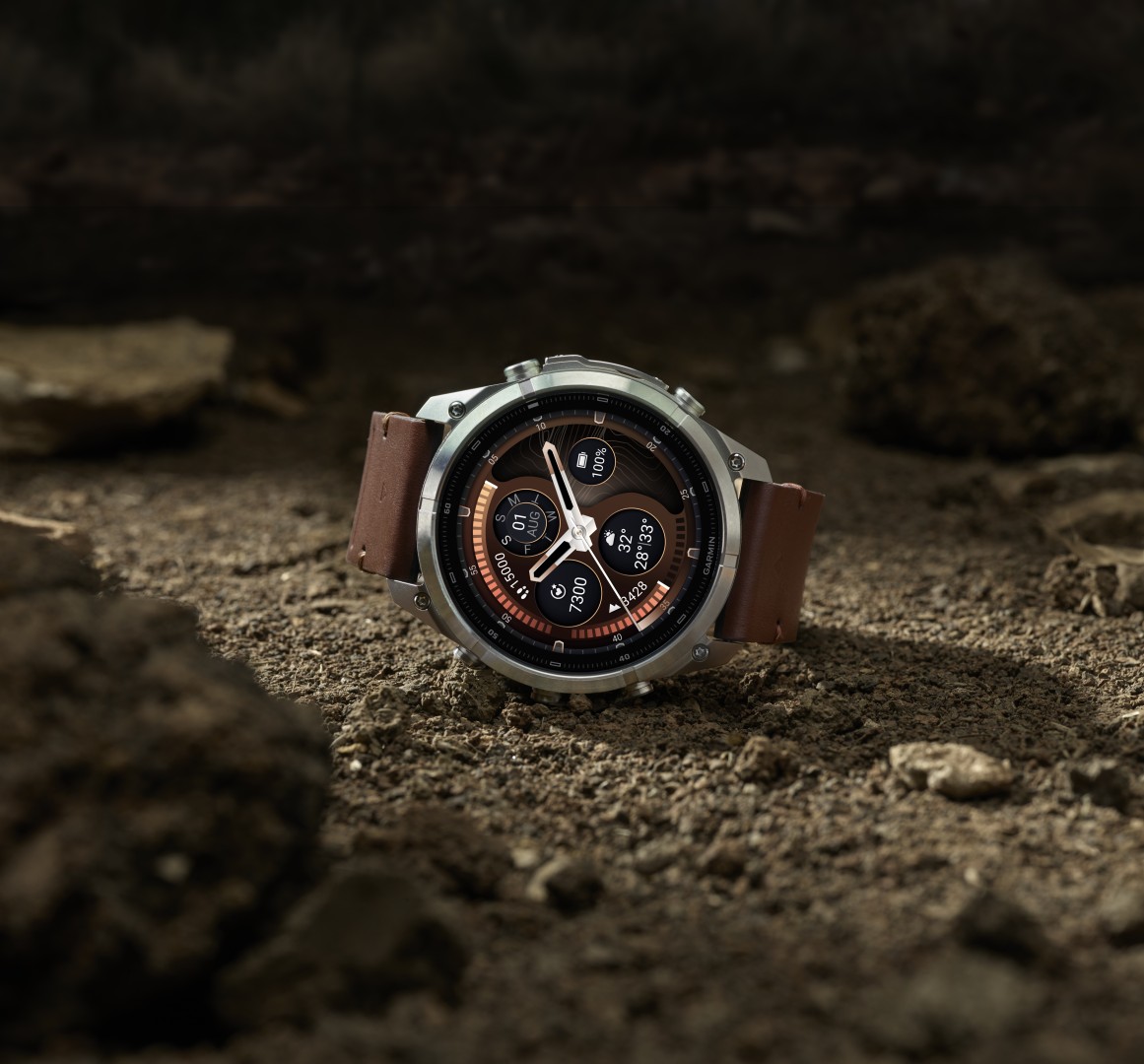
As an official Garmin retailer, we welcome this Fenix 9 with enthusiasm, and for specific reasons. What convinces us: sapphire and titanium across the range, the display announced as more than twice as bright, satellite communication built into the watch right down to the 43 mm size for slim wrists. What deserves thought: the standard Fenix 9 has the same battery life as the 8, and solar comes, in our catalogue, on two inReach references. Our network also has a privilege of its own: the Pro inReach editions on a leather strap, delivered in a presentation box with a second silicone strap, are reserved for the watch-retailer network (€1,299.99 to €1,399.99 depending on size and finish). The engraved plate screwed to the case side and the ivory or hazelnut leather make it the dressiest Fenix we have sold. Find the whole range in our Fenix 9 category, and the rest of the brand among our Garmin smartwatches, with the two-year manufacturer warranty. We ship internationally with DHL. Your terrain, your call.